Zero, by Design
Redefining What’s Possible
No fuel, no fallback, no compromise: the world’s first true zero-emissions superyacht nears launch — and opens its plans to all.
How do you go about making what, for many, seems impossible — a yacht fully free of fossil fuels?
It turns out that the first step isn’t about having futuristic technology, but rather having the right mindset.
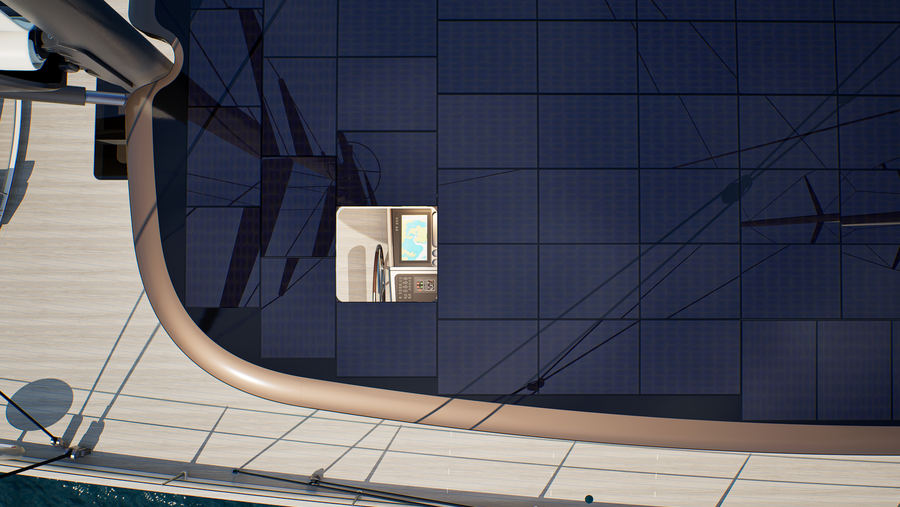
“We never thought ‘No, this can’t work,’ that’s not the way we are wired,” explains Vripack Yacht Design’s Marnix Hoekstra of the enormous challenge. “Instead, we framed it as ‘How might we get this to work?’”
There is, Hoekstra continues, something very powerful in that approach. Fortunately, it’s an attribute shared by the trio of leading names involved in bringing Project Zero, the world’s first yacht of her size designed to operate without any fossil fuels, to life: Vitters Shipyard, Dykstra Naval Architects and Vripack Yacht Design. The trio is being assisted with input from the open source Foundation Zero, a non-profit founded by a group of impact investors committed to a future where renewable energy is the norm.
This can-do attitude has shifted mountains. Sailing yacht Zero, as the sleek 69m aluminium ketch will be named when launched, is no longer a dream or a bunch of sketches on paper. It is currently in the final phases of outfitting at Vitters.
This is one of the most challenging phases of the build, Hoekstra says. “All the design and technology is coming together now and, even for such an extremely large vessel, it’s a lot.”
If Hoekstra had to hazard a guess, he would say they are around six months away from a launch later this year or in early 2026. It’s a debut that the eyes of the yachting world will be firmly fixed on.
Zero fuel and zero compromise
Powered by hydro, solar and wind power, there’s no combustion engine nor a single fuel tank onboard the yacht. Zero is designed to operate autonomously for two weeks with guests on board without using any external energy sources. “So, completely off-grid, self-driven, self-harvesting energy,” Hoekstra says. Even once it is launched, work will continue to refine the renewable energy systems, control software and other tech facets.
While zero-fossil has been the ultimate goal, it had to be achieved without compromising on aesthetics or comfort. “That’s been one of the driving philosophies of this project,” Hoekstra adds.
The result is a true world cruiser that blends cutting-edge renewable tech with all the lelements you would expect from a yacht and a distinctive-looking, elegantly classic exterior design with modern hints.
“It fits definitely in the area where other yachts of its size are in terms of proportions, sheer lines, bow curves, etc,” Hoekstra explains. Yet, look closely and the level of detail becomes obvious.

I’ve never seen such a detailed design as the owners have allowed us to do here.
A wooden stern, bare woods that aren’t treated with varnish, and Tesumo engineered wood for the deck instead of teak. “The thick bull-nosed salon deckhouses with round curved windows and the structural glass protecting the main and owner’s cockpits,” says Hoekstra, “the list just goes on.”
The rigs and masts have been made from carbon, as have the deckhouses, while high-tensile aluminium has been chosen for the hull.
Zero is, Hoekstra enthuses, a “state-of-the-art yacht with a look that makes you dream of times gone by.”
An open-source approach
Even more remarkable is that the entire project is open source, meaning that every sketch, report, key system design and operational data measurement is available in the public domain via Foundation Zero’s platform to serve as a driver for further innovation in responsible, sustainable sailing.
“We hope that a lot of people will use the open source reports which Foundation Zero is publishing,” Hoekstra says. “We hope more projects like this will happen and that people, in general, are inspired by the enormous creativity we have if we join forces and we bring out the best of everybody in the team.”
Whatever the future brings, Hoekstra says little has compared to the realization that: “Wow, this is really going to happen”.
“Two weeks ago, I was on board with the owners and they’re just so proud,” he says. “I mean, I’ve seen people happy on board the boats we’ve designed — obviously we aim for everyone to react like that! But to witness their vision, setting that up and then inching closer to the finish line, that’s just so cool.
“Nothing beats that.”