The Accidental Ice Queen
Arctic Firsts
In 2022, Captain Maiwenn Beadle became the first woman to command a superyacht through the Northwest Passage — a 10,000-mile journey through one of the most remote and unforgiving regions on earth.
In late 2018, Maiwenn Beadle received an invitation. Would she like to captain a 36m ice-class tug through the Northwest Passage, the legendary sea route through some of the harshest conditions on earth?
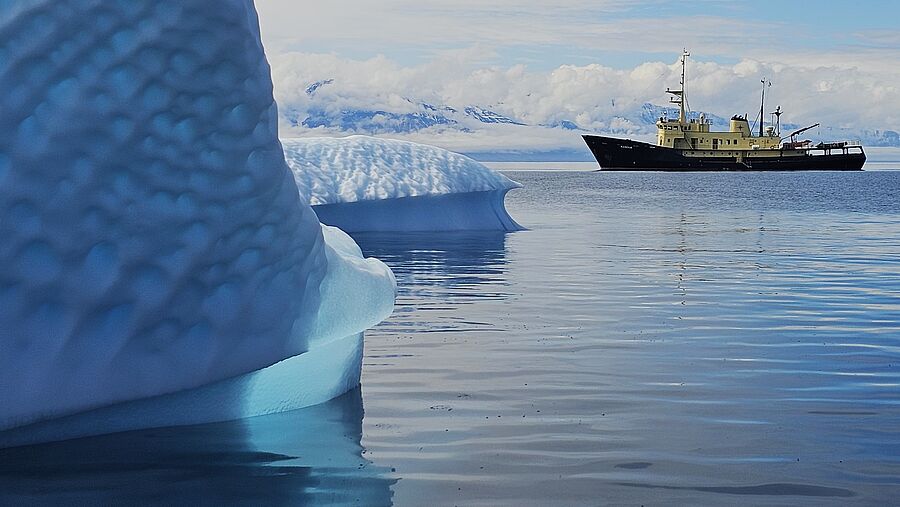
Photo: Maiwenn Beadle
Since the first transit of the passage — defined as the navigation of the waterway from the Arctic Circle to the Arctic Circle in either direction using any one of several routes — by Norwegian Roald Amundsen in 1906 until the end of 2022, only 351 transits had been recorded.
First Female
Only a handful of those transits had been done by women. What’s more, only around 30 superyachts have made the trip. If she said yes to the opportunity and completed the transit, she would become the first female to captain a superyacht through the Passage, and the first female commercial master to do so.
Talk about making history.
The invite was out of the blue — although, as a skipper of a small cruise ship sailing between Seattle and Alaska, she had the background and experience driving through ice and watching wildlife.
From California to New Zealand
Born and raised near Reading, England, Beadle studied fine art in Newcastle before a trip on a sailing yacht from California to New Zealand in the 1990s changed the course of her career. Soon, she was working on yachts, rounding Cape Horn in her 20s and sailing her own 18 foot converted lifeboat the length of the Caribbean islands single-handed.
After working as a steward and chef, she earned her ticket as a captain, making several Atlantic crossings as master of a 29m sailing yacht before transitioning from sail to power and moving into small ship cruising.
Given her background, it’s hardly a surprise that she accepted the invite.
After flying to the Netherlands to pick up the vessel from refit, Beadle then sailed it via Scotland and Iceland to Greenland and onto Point Inlet in Canada, traditionally considered the eastern gateway of the passage.
Everything was set to push forward with the trip, but then the COVID-19 pandemic swept across the world and all plans were put on pause.
The following year, 2021, with the Canadian Arctic still closed to traffic, Beadle succeeded in steering the ship into Greenlandic waters, where it sailed up the west coast of Greenland to the edge of the polar ice sheet at 79 degrees north, around 600 miles from the North Pole.
The boat returned to Southampton for the winter, but the trip to Greenland had cleared the way for Beadle to make the attempt to sail to the Pacific in 2022.
The trip would take seven weeks in total, and the logistics had to be planned out with pinpoint precision to ensure adequate provision of food and fuel for an itinerary with almost no place to restock supplies en route.
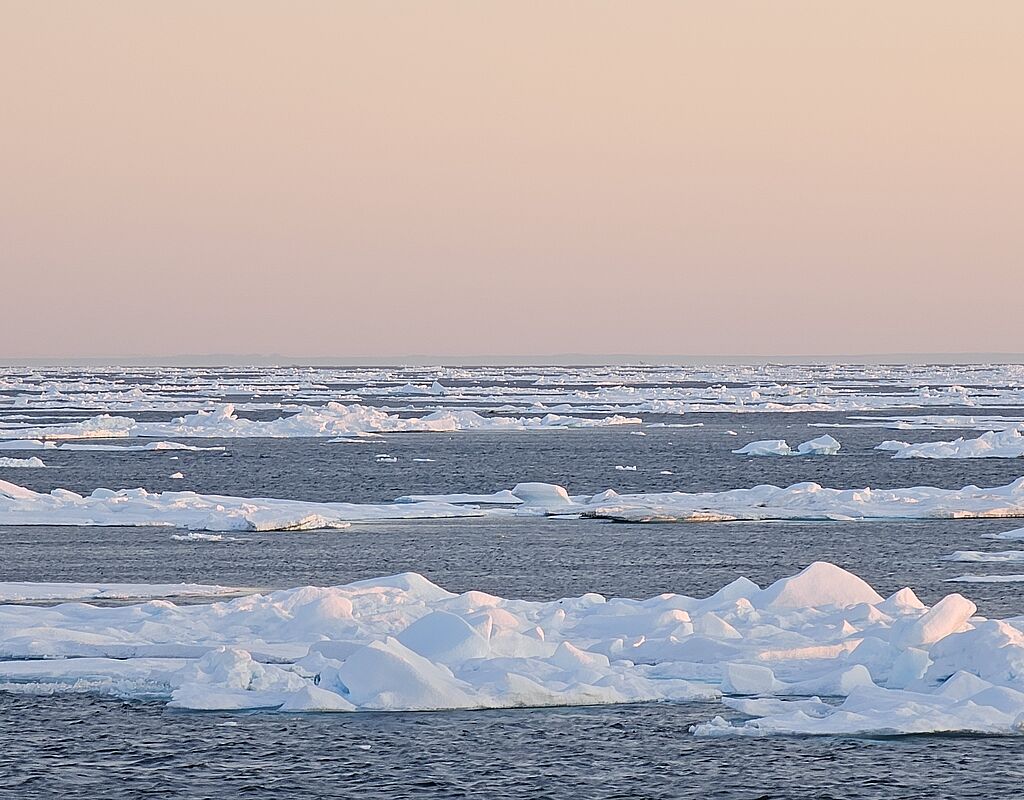
Photo: Maiwenn Beadle
It's a Matter of Weeks
“Although global warming means that the Northwest Passage is more open than in Amundsen’s day, the ice only clears for a matter of weeks in late summer and, in some years, cold weather or strong northerly winds mean that the Passage remains blocked to all but the largest ice-breaking ships,” Beadle says.
“Over the long central section of the route, there is no one around and, far beyond the range of search and rescue services, very little support available in the event of a mishap. The constantly moving ice and the constant presence of polar bears add enormously to the risks of anchoring for the night.”
Setting off in the footsteps of Amundsen, Beadle steered the vessel across the Arctic Circle on July 17th, 2022 and recrossed into the Bering Sea on August 28th, arriving in Victoria, Canada, for the winter in September. Since leaving Southampton, Beadle had sailed 10,000 miles, or the equivalent of halfway around the globe in a straight line.
Talking to Dockwalk about the experience, Beadle described the epic journey as “enormously stressful”, saying that it was quite overwhelming at times. “The trip itself ran into a blur in lots of ways,” she says. Ice reports, weather forecasts and satellite images became a constant focus, to ensure it was safe to push forward as concerns swirled that the ice would close behind them.
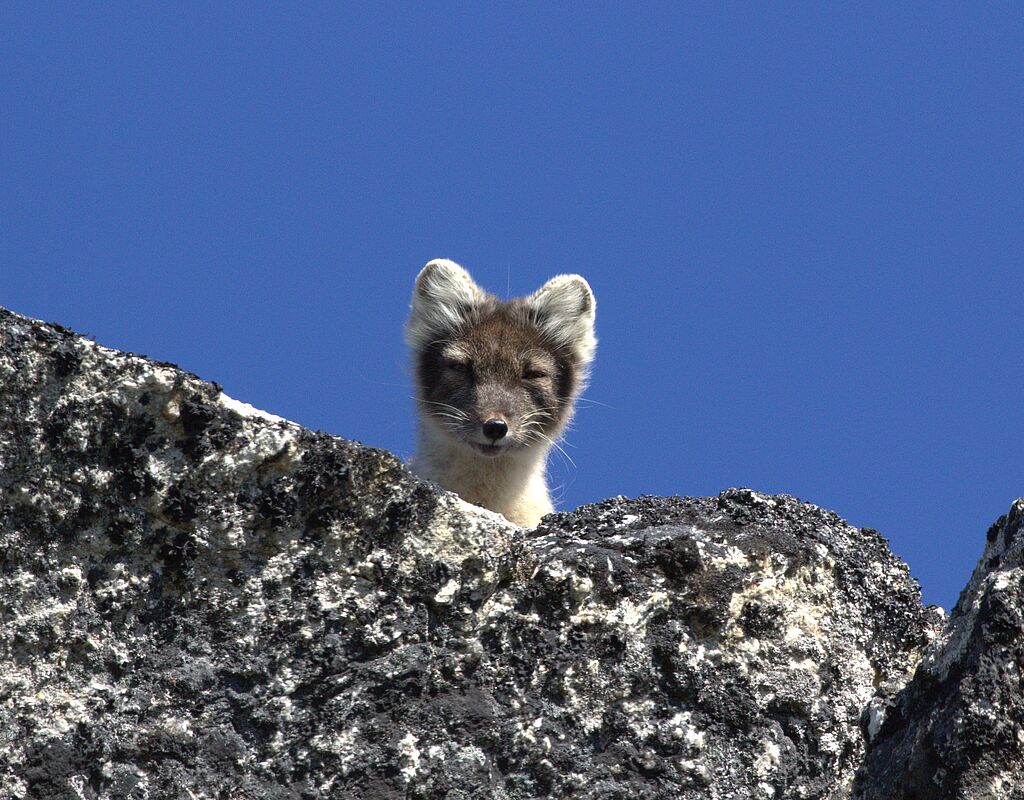
Wildlife makes for breathtaking moments. (Photo: Maiwenn Beadle)
But that doesn’t mean there weren’t breathtaking moments from the once-in-a-lifetime opportunity. “The light was incredible, and it was like a magical, mystical fairy wonderland — pinks and purples and it was midnight, but it was daylight,” she said.
After completing the epic journey, Beadle took time out to recharge under the warmth of the Antiguan sun.
“It was an exhausting and exhilarating experience to carry the responsibility for the vessel and crew over that time and distance, and I need some time out to reflect on it all,” she said.
She now acts as an “ice advisor” and offers voyage planning consultancy, as well as continuing to captain vessels.
Does she consider herself an Ice Queen? “Maybe an accidental one.”