Hard line on anchoring
Seagrass Protection Enforcement
French courts issue fines and compensation orders for seagrass damage, signaling strict enforcement of Posidonia protections.
In October 2023, a landmark ruling was handed down in the Marseille Maritime Court. A 26m yacht had been found anchoring in Posidonia seagrass zones around Cannes and Saint-Tropez three times between 2021 and 2022. The captain received a €20,000 fine and a one-year ban on sailing in French waters.
In the follow-up civil ruling in November 2024, with two environmental associations — France Nature Environnement and the Ligue de Protection des Oiseaux — as the civil parties, the captain was ordered to pay €86,537 in compensation for ecological damage to seagrass meadows and €5,000 in moral damages to the associations. The compensation payout was handed to the Rhône-Méditerranée-Corse Water Agency to finance Posidonia restoration and protection initiatives.
On the same day, a captain of a 51m yacht was ordered to pay €15,000 in fines and over €22,000 in compensation for similar actions.
This case was significant as it shows French authorities mean business when it comes to enforcing Decree 123/2019 issued by the French Maritime Authority, Préfecture Maritime de la Méditerranée, which prohibits yachts over 24m from anchoring in defined Posidonia zones, unless they anchor at buoys, use dynamic positioning or organised anchorage.
Even further restrictions apply for yachts over 45m, which are required to notify authorities before anchoring in these zones, while yachts greater than 80m must obtain official authorisation to do so.
Between 2020 and 2023, 17 separate prefectural decrees along the Mediterranean coastline implemented this decree.
What’s more, the ruling demonstrates a recognition of presumption of harm — that once a yacht anchors in a banned zone, ecological damage is assumed.
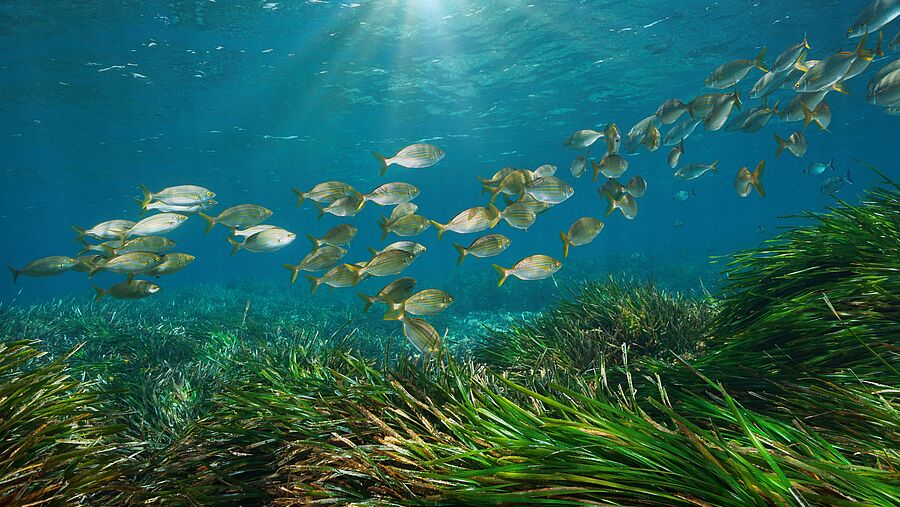
Endemic seagrass plays a critical role in the Mediterranean ecosystem, supporting biodiversity, coastal protection and carbon removal. In recent decades, meadows have shrunk by around 30 percent due to anchoring, trawling, coastal development and pollution.
Other Mediterranean countries have since introduced similar legislation, including Monaco, Italy and Spain. In fact, the Balearics are considered to have the strictest regulations of the entire Mediterranean, with a fleet of boats patrolling waters inspecting anchored yachts. Last year, 180,867 inspections were carried out.
For captains and crew, the DONIA app pinpoints the location of 10 eco-mooring buoys in Cannes, Antibes and Beaulieu-sur-Mer, which can be booked through the app. Twenty percent of the cost goes towards REPIC (REstaurer la Posidonie Impactée par les anCres), a program run by Andromède Océanologie. Another reference is Medtrix, a government-backed platform with interactive habitat maps that allow captains to identify no-anchor zones and sand patches.
The Insurance Angle
In some cases, liability insurance might cover fines for damaging a protected seagrass meadow, however, the Captain would have to demonstrate that they took steps to avoid the event giving rise to a fine and that it was an accidental breach. Captains should also be aware that yachts are often held by authorities until fines are fully resolved. To avoid legal complications, minimize environmental harm, and stay in compliance with Mediterranean regulations, we recommend following ECPY association guidelines: anchor only on sandy seabeds or use tools like the Donia and Medtrix apps, and when retrieving the anchor, bring the yacht directly over it to lift it vertically rather than dragging it.