A Progressive, Impactful, And Circular Approach
Luxury trends and refit
Refit means that owners invest in the yacht’s value and its prolonged lifecycle, while shipyards prolong their relationship with the client.
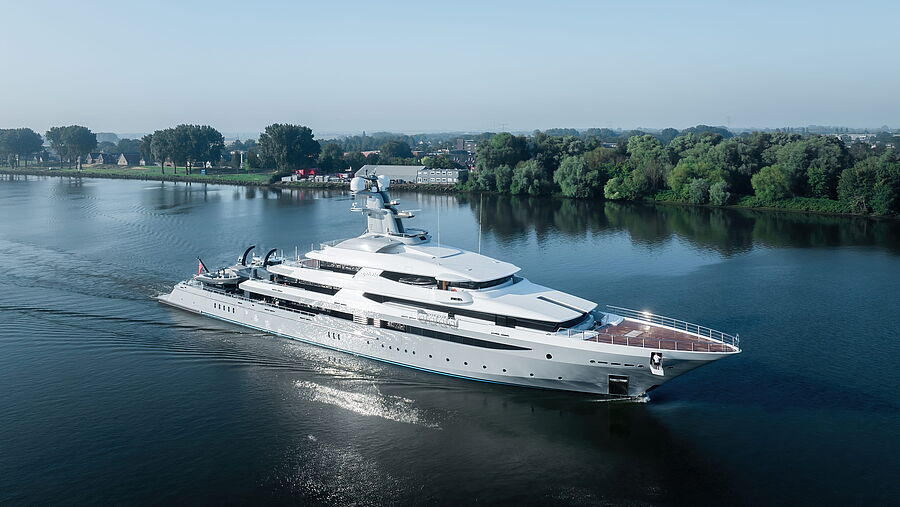
Shipyards such as Oceanco are integrating “Refit as a service” into their offerings. (Photo: Oceanco)
Just as the concept and approach of luxury are evolving, so are yachts and their auxiliary services. For the latter, refit plays a crucial role, which aligns with the UN Environment Program’s “R Strategies” on circularity. These cover the full life cycle of a material or product, including strategies such as rethinking or refusing during sourcing and production, repairing or repurposing during use, and recycling at the end of its life. While R Strategies are no longer solely focused on the fast-fashion industry, they are also gaining momentum and driving change across other industries. And luxury is no exception.
“R” Strategies a guiding principles
Whether automotive, fashion, or yachting, the concept stays the same: clients bring their product back to the brand, the manufacturer, who refreshes it for prolonged joy and usage. Ferrari has its Genuine Maintenance Program, Chanel and Hermès offer repair and maintenance services, and shipyards, such as Lürssen and Oceanco, are integrating “Refit as a service” into their offerings.
Enhancing lifespans and addressing lifecycles are forms of sustainability that, however, do not compromise customization, comfort, or experiences. And this is where the power of refit lies. Even after some operational time, a refit can address necessary regulatory requirements or owners’ discretionary changes through an incremental approach: from smaller (interior) changes to substantial transformations, such as a rebuild. Let’s have a look at the luxury trends of (1) impact (also known as sustainability) and (2) wellbeing (including going back to nature) and how they can be integrated into refit.
(1) Impact
Progressive luxury means going above one’s hedonism and naturally contributing to society and the environment. Whether it is providing an impact through innovation, education, or contribution. All, which is achievable through refit. Examples from other luxury industries and from the yachting industry give inspiration for opportunities.
1.1 Pre-owned interiors
High-end cars, handbags, and watches are already given a second life through pre-owned programs. So why not offer the same for yacht interiors? Instead of furniture and accessories ending up in storage, they could find a new home and even come with a story. Alternatively, objects on board can be refurbished. Dornbracht, for example, offers a ReCrafted program for its timeless icons. This, in turn, results in, e.g., a reduced carbon footprint and saved materials.
1.2 Research contribution and education
In tropical resorts, marine protection initiatives are already integral. The Four Seasons Landaa Giraavaru in the Maldives, for example, has an on-island marine research center and is engaged in marine conservation programs. Linked to yachting, yachts can naturally contribute to scientific purposes while cruising, such as contributing to mapping the seabed. Non-profit organizations like the SeaKeepers Society support owners in integrating research initiatives on board. Children and (charter) guests alike can learn about the ocean, marine ecosystems, and their biodiversity, and can be part of meaningful measures.
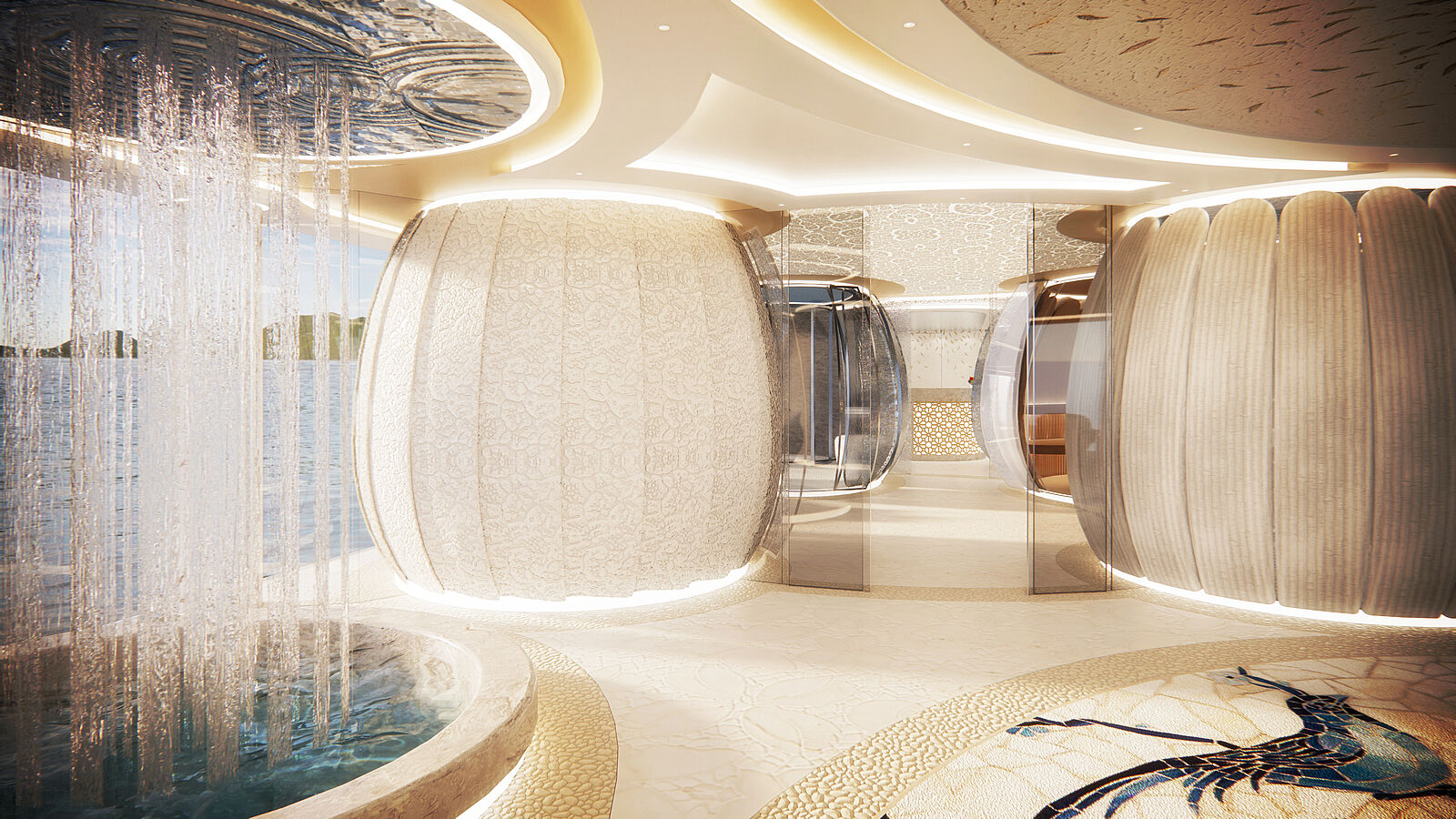
Dasha Moranova Designs developed the project “Senses” offering immersive digital and natural experiences. (Photo: Dasha Moranova Designs)
(2) Wellbeing
Luxury is a feeling. Thus, feeling good is as important on land as on sea, and wellbeing and longevity are key drivers of contemporary luxury. Hereby, nature plays a fundamental role. Either as a design inspiration or to be more connected to the naturally given surroundings.
2.1 Space for spaces and nature
When thinking about wellbeing, the spa and a multi-sensory approach take center stage. As water has a natural calming power (cf. Blue Mind Theory by Dr. Wallace J. Nichols), being closer to this given environment makes sense. Dasha Moranova Designs teamed up with Lateral, VBH, and Sonance for the project “Senses” offering immersive digital and natural experiences with features such as sound healing or a meditation pod, all enhanced by “Free Form Bulkheads” for an almost 360-degree ocean view.
Wellbeing can further act as a guiding principle throughout the yacht and its operations. While the latest sandstone-colored Technogym equipment or a cryotherapy chamber is fantastic, the holistic approach should also address crew spaces that affect their wellbeing. Only then are a yacht and the on-board experience truly aligned. The rebuilt Draak by Oceanco showcases exactly this, with enhanced and extended crew areas to support crew wellbeing. A state that can be further enhanced by nature-inspired design principles.
2.2 Biophilic design and biomimicry
Natural materials and light, round shapes, and earthy colors are scientifically proven to enhance harmony and health. This design principle is called biophilic design. The Maldivian resort Joali Being is built around a spa with a dedicated wellbeing approach and features biophilic design throughout the resort and villas. Beyond that, biomimicry is another discipline that draws on principles from nature that can be applied to design and even engineering solutions. Hereby, refit could be part of advancing new approaches and giving inspiration for new-build projects.
The refit impact
Consequently, the forms and benefits (for the individual, the yacht, or the environment) of refit are manifold. Owners hereby invest in the yacht’s value and its prolonged lifecycle, which also offers the opportunity to become pioneers. While comfort on board increases, so does the attractiveness to charter guests.
In turn, refit-as-a-service supports shipyards in prolonging their relationship with the client and offers a progressive approach towards a more sustainable future. Those shipyards that understand the trends and mindset shifts stay ahead and can proactively offer co-creative opportunities with partners and concepts. Overall, the yacht could become not only a sanctuary that improves wellbeing for the owner, but also for the crew, everyone involved, and the planet. Because then, it is a true luxury with impact. And maybe even the greatest one?